




Fassisi-tag
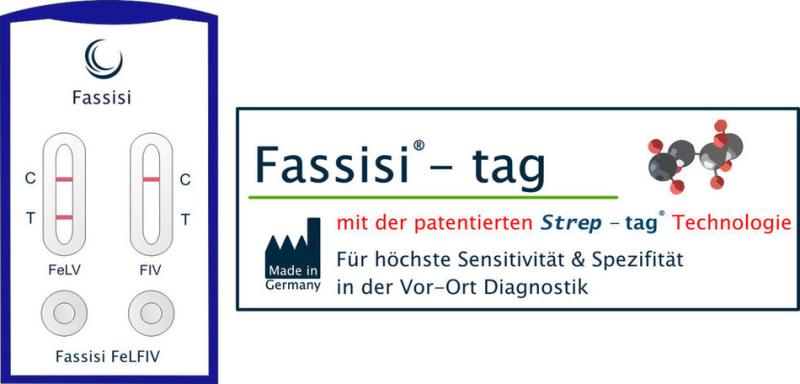
As part of a two-year research project conducted with partners, Fassisi has developed the next generation of lateral-flow test systems using the patented Strep-tag technology.
This technology enables lateral-flow tests to achieve the highest possible levels of sensitivity and specificity.
Technical Background on the Fassisi®
The Fassisi® system has been a recognized method since the early 1990s and is successfully used in the affinity chromatographic purification of proteins.
Strep-tag® technology is based on the strong binding affinity between the proteins streptavidin and biotin: Streptavidin is produced by the bacterium Streptomyces avidinii and has an exceptionally high binding affinity for biotin. This high binding affinity between streptavidin and biotin has been routinely used in biotechnology for decades for detection and signal amplification in enzyme-linked immunosorbent assays (ELISA).
Since the early 1990s, this system has been optimized, and the binding partners biotin and streptavidin have been transformed into the peptides (Strep-tag®) and (Strep-Tactin®).
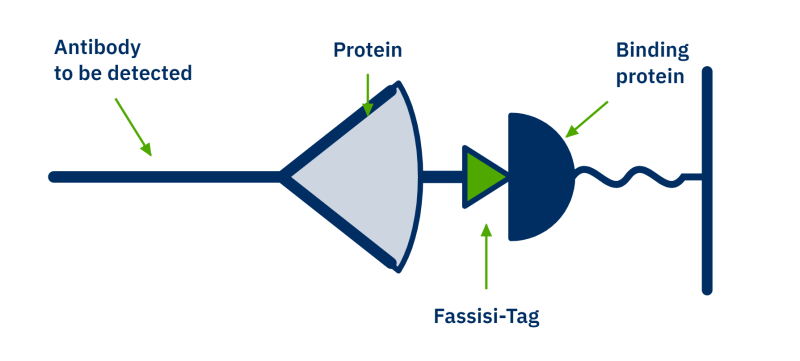
Strep-tag® is the synthetic peptide of biotin, consisting of eight amino acids, which exhibits an exceptionally strong binding affinity for Strep-Tactin®, the synthetic derivative of streptavidin. Strep-tag® can be coupled to both the N- and C-terminal ends of proteins without altering their biological properties. This exceptionally strong binding between Strep-tag® and Strep-Tactin® is used, among other things, to purify Strep-tag®-conjugated recombinant proteins—even from cell mixtures—completely and under physiological conditions.
The Fassisi® tag incorporates these properties into a lateral-flow assay.